What Is the Best Way to Clean My Teeth? Advice From a Northborough Dental Office
Good technique matters more than pricey gadgets. Here is what we look for when we check how well a patient's daily routine is working.
What is the best way to clean my teeth?
The best way to clean your teeth is to brush for two full minutes twice a day with a soft brush and fluoride toothpaste, angled toward the gumline, and to clean between every tooth once a day. Add a professional cleaning on the schedule your dentist recommends to remove hardened tartar. Book a visit at (508) 715-9996.
How should I brush, and for how long?
Two minutes is longer than most people think, so a timer or an electric brush with a built-in one helps. Use a soft-bristled head and tilt it about 45 degrees toward the gums. Plaque collects right where the tooth meets the gum, and that line is where most missed spots show up during an exam.
Small, gentle circles clean better than hard scrubbing. Pressing harder does not remove more plaque. Over time it wears the gums back and can scratch the softer root surface that gets exposed. Work through the mouth in the same order every time so no area gets skipped.
When you finish, spit out the extra toothpaste but skip the big rinse with water. Leaving a thin film of fluoride on the enamel gives it more time to strengthen the surface.
- Soft bristles, replaced every three months or when they splay
- Fluoride toothpaste, about a pea-sized amount for adults
- Brush in the morning and last thing before bed
- Include the backs of the molars and the tongue side of the lower front teeth
Is flossing really necessary if I brush well?
Yes. A toothbrush reaches the front, back and chewing surfaces, but the sides where two teeth touch stay out of reach. Those tight contacts are where many cavities between teeth begin, and they often need a small filling by the time they show on an X-ray.
The tool matters less than doing it every day. String floss works well when you wrap it in a C shape around each tooth and slide it just under the gumline. Small interdental brushes suit wider gaps. Water flossers help people with limited hand movement or a lot of dental work, though most work best alongside floss rather than in place of it.
What about mouthwash, the tongue and what I drink?
Mouthwash is optional. A fluoride rinse can help people prone to cavities, and some rinses freshen breath, but none of them replace brushing and flossing. If you use one, try it at a different time of day than brushing so the toothpaste fluoride is not washed away.
The tongue holds a lot of the bacteria behind bad breath. A gentle pass with your brush or a tongue scraper each morning takes a few seconds.
How often you snack and sip matters as much as what you eat. Sipping coffee with sugar or a sports drink over a long afternoon keeps teeth bathed in acid for hours. Water between meals rinses the mouth and is the easiest habit to add.
What does a professional cleaning remove that brushing cannot?
Plaque that stays on teeth for a day or two begins to harden into tartar, also called calculus. Once it hardens, no toothbrush or floss will lift it off. During a cleaning we remove it with fine hand instruments and, where it suits, an ultrasonic scaler, then polish the surfaces smooth so new plaque has less to grip.
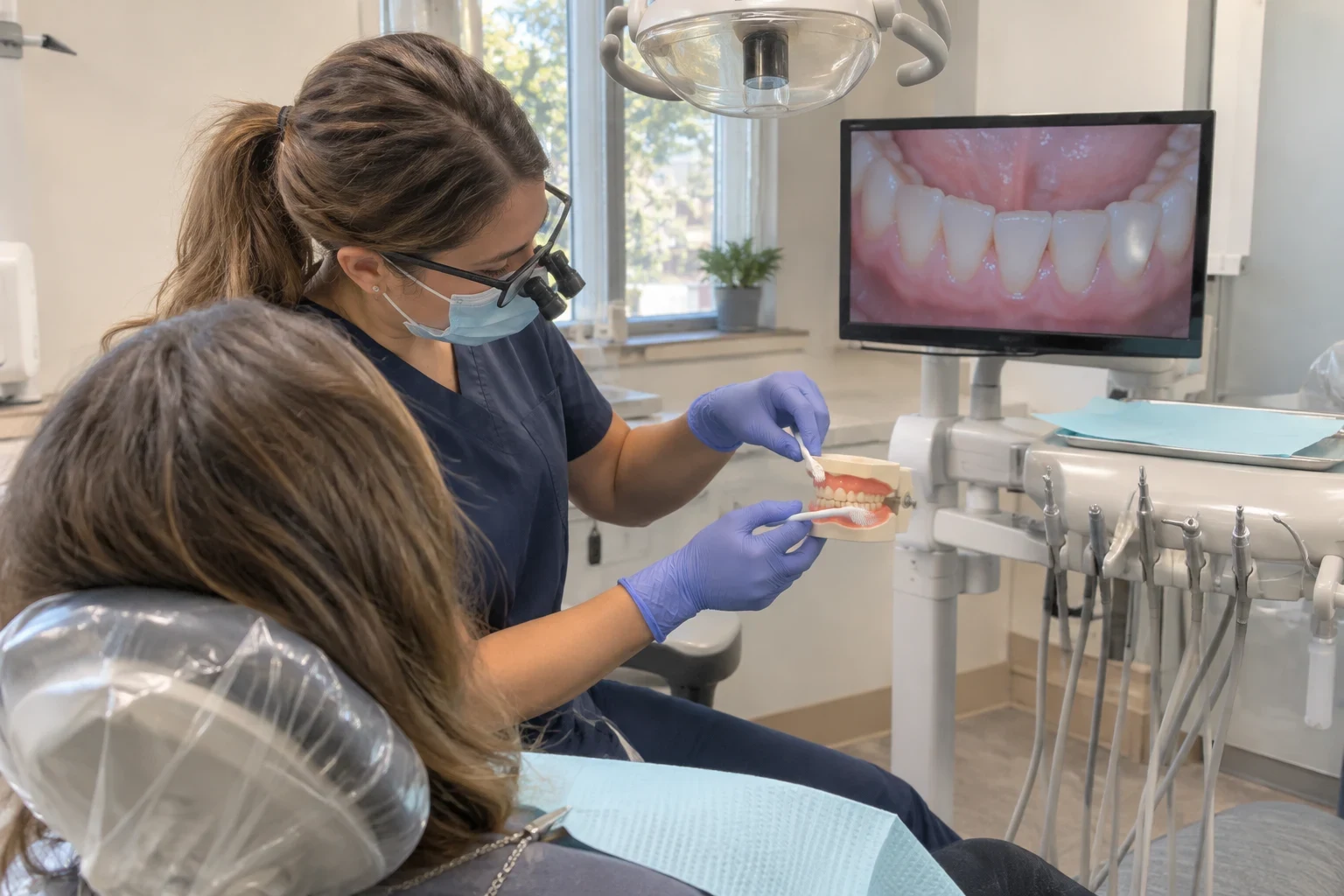
The exam that goes with the cleaning is where problems get caught early: a cracked filling, a worn edge, gums that bleed in one spot. We take intraoral photos of what we find and walk you through them on screen, so you can see the exact areas your routine is missing and what was done about them.
Many adults do well with a cleaning every six months. People with gum disease, a lot of crowns and bridges, or a history of heavy tartar may need shorter intervals. We will tell you which group you fall into and why, based on what we see.
- Tartar removal above and just below the gumline
- Polishing to smooth the enamel
- A check of gums, existing fillings and crowns
- Photos of any areas that need attention, shared with you chairside
Does cleaning change with crowns, bridges or aligners?
It does. A bridge is joined to the teeth on either side, so floss cannot slip down between them. A floss threader or a super floss strand passes under the false tooth to clean the gum beneath it, which is where food and plaque tend to collect.
Clear aligners need their own routine. Brush and floss before putting trays back in, or food gets trapped against the teeth for hours. Rinse the aligners whenever you take them out and brush them gently with cool water and clear soap. Toothpaste is abrasive and will cloud the plastic.
Children need an adult's help with brushing until their hand control catches up, often around the age they can tie their own shoes well. A smear of fluoride toothpaste for toddlers and a pea-sized amount from about age three is the usual guidance.
More questions about cleaning your teeth
Something not covered here? (508) 715-9996
Should I brush right after eating?
After acidic foods or drinks such as citrus, soda or wine, wait about 30 minutes. The enamel is briefly softened, and brushing right away can wear it. Rinsing with water in the meantime helps.
Is an electric toothbrush better than a manual one?
Either can clean well with good technique. Many patients find an electric brush makes it easier to reach the gumline and keep to two minutes, and models with a pressure sensor help people who brush too hard.
My gums bleed when I floss. Should I stop?
Usually not. Light bleeding often means the gums are inflamed from plaque, and it tends to settle within a week or two of gentle daily flossing. If it continues, let us take a look at your next exam.
Do you take insurance for cleanings?
We accept most dental insurance plans. For patients without insurance we offer an Office Dental Plan, and the CareCredit Patient Payment Plan is available as well.
See exactly how your routine is working
At your cleaning we remove the tartar brushing leaves behind, check your gums and dental work, and show you photos of what we found and what we did. A short call sets up an appointment that fits your schedule.