ServicesFillings
Fillings in Northborough
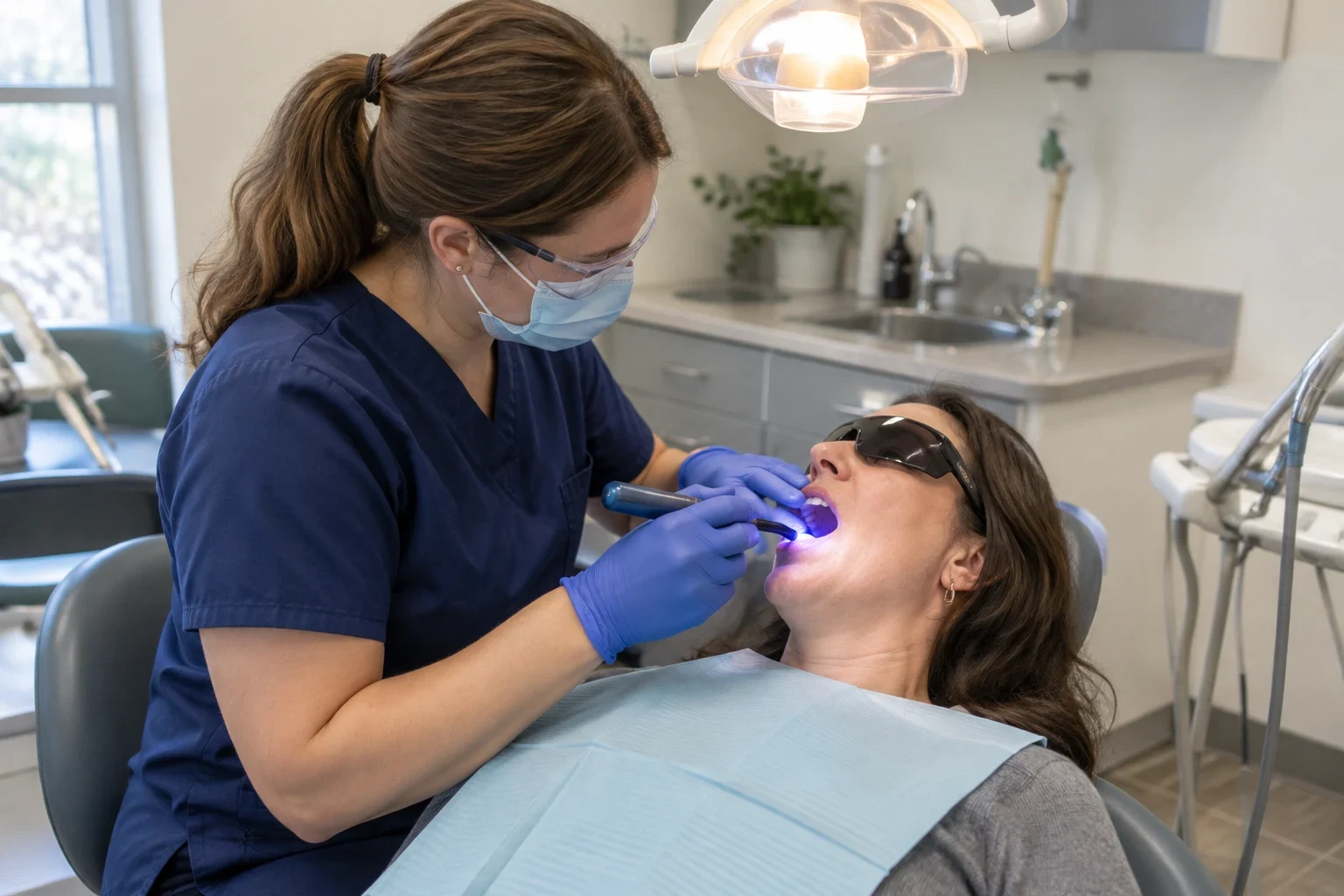
We repair cavities, small chips and failing old fillings with tooth-colored composite, shaded to match the teeth around it. Before we start, we show you a close-up photo of what we found. When we finish, we show you the result.
A small repair, done carefully
A filling replaces the part of a tooth that decay or a fracture has taken. We remove the soft, damaged structure, keep as much healthy tooth as we can, and rebuild the shape so your bite feels the way it should.
Most of the work is invisible once it is done, so we photograph it. You see the dark spot or crack on screen, then the cleaned tooth, then the finished filling. A small cavity treated now usually stays a small filling. Left alone, the same cavity can reach the nerve and need a crown or a root canal instead.
What a filling visit includes
- Close-up photos and x-rays
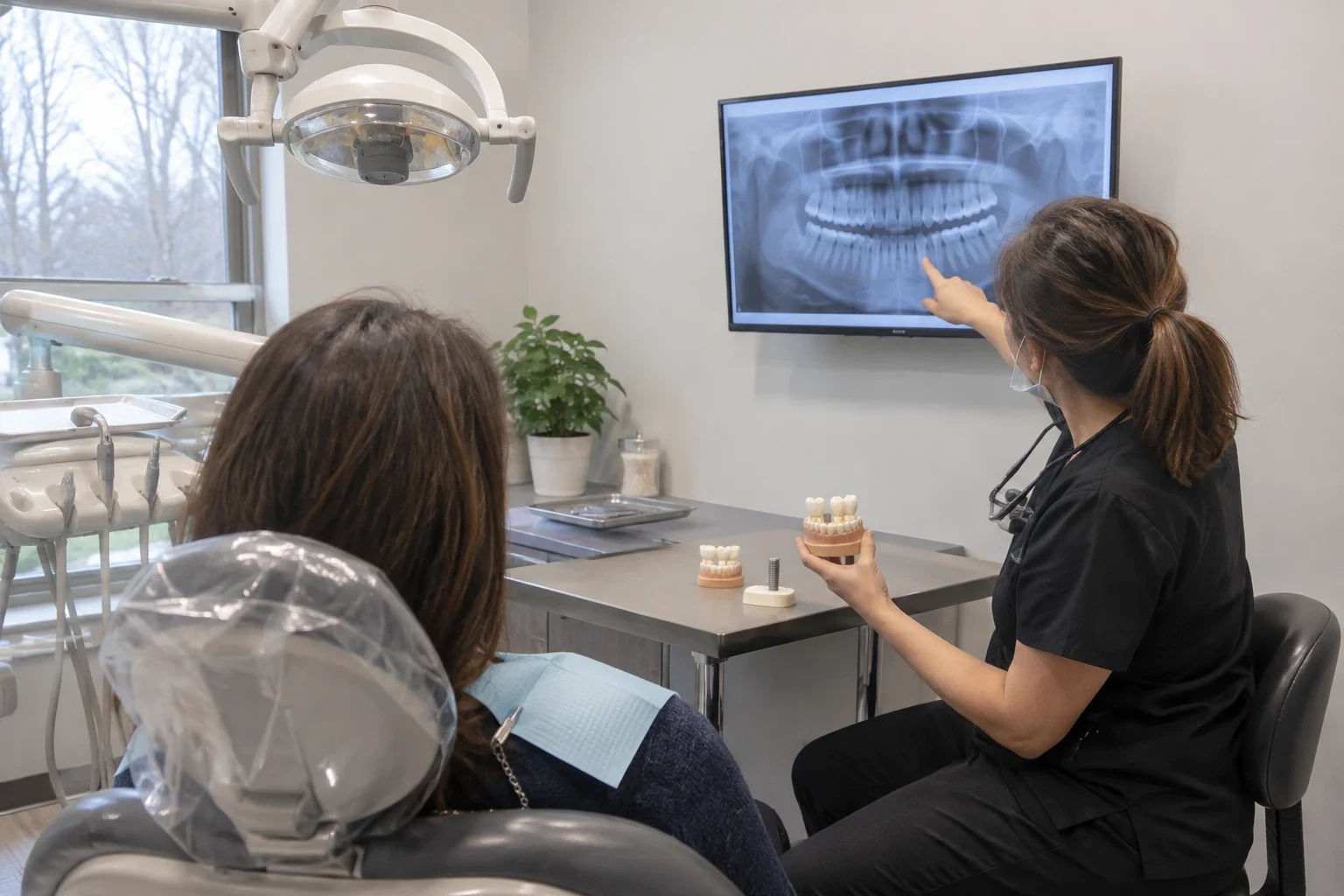
- An intraoral camera shows the surface of the tooth, and an x-ray shows decay between teeth that a mirror cannot reach. We walk you through both before anything is numbed.
- Comfortable numbing
- We use a topical gel first, then local anesthetic given slowly. For very shallow repairs, some patients choose to skip it, and we discuss that with you.
- Composite resin, layered and cured
- Composite goes in thin layers, each hardened with a curing light. Layering reduces shrinkage stress and gives a tighter seal at the edges, where new decay tends to start.
- Shade matching and polish
- We pick the shade with the tooth still moist, since dried enamel reads lighter. The surface is shaped and polished so it reflects light like natural enamel and does not catch floss.
- Bite check
- Before you leave, we check your bite with marking paper and adjust any high spot. A filling that sits even slightly high can make the tooth ache for days.
Signs a tooth may need a filling
Sensitivity to sweets or cold
A short, sharp twinge from ice water or candy often means enamel has worn through to the softer layer underneath.
Food catching in one spot
If floss shreds or food packs between the same two teeth every meal, there may be a cavity or a broken edge there.
A stain or jagged edge
Brown or gray marks that stay put after brushing deserve a closer look. So does a rough corner that snags the tip of your tongue again and again.
Wear around an older filling
Older fillings can crack, wear down or pull away at the margin. A dark line around one is often decay working underneath.
Pain when biting
Pain on chewing can point to a cracked tooth or a deep cavity. Sometimes a filling is enough, sometimes a crown is the better repair, and the camera images help us show you why.
What affects the cost of a filling
We explain the fee before we start, so nothing on the bill is unexpected. We accept most dental insurance plans, and patients without insurance can use our Office Dental Plan. The CareCredit Patient Payment Plan is also available if you would like to spread out the cost.
Number of surfaces
A tooth has up to five surfaces. A cavity on one surface is a smaller repair than one wrapping around the side and top of a molar.
Size and depth
Deeper decay may need a protective liner near the nerve and more time to rebuild the tooth properly.
Front or back tooth
Front teeth call for more careful shade layering, while molars need extra strength for chewing forces.
Your coverage
Insurance plans vary in how they cover composite fillings, especially on back teeth. We can check your benefits so you know your share before the appointment.
How the appointment runs
- 1
Examine and record
We examine the tooth, take any x-rays needed and show you the images. You hear what we recommend and what it involves before we begin.
- 2
Numb and isolate
Once the tooth is numb, we keep it dry with cotton rolls or a small rubber barrier. Composite bonds poorly to a wet tooth, so this step matters for how long the filling lasts.
- 3
Remove decay and rebuild
We clear the damaged structure, capture the clean tooth on camera, then bond and layer the composite. A single-surface filling usually takes well under an hour.
- 4
Shape, polish and show you
After the bite is adjusted and the surface polished, we take a final photo so you can see the finished tooth next to the starting picture. Your lip and tongue may stay numb for a few hours.
Questions about fillings
Will getting a filling hurt?
Most patients feel pressure and vibration but not pain once the tooth is numb. We wait until the anesthetic has fully taken effect before starting. If you feel anything sharp, raise a hand and we stop.
When can I eat afterward?
Composite is fully hardened by the curing light before you leave, so the filling itself is ready for chewing right away. It is still wise to hold off on a full meal until feeling comes back, since a numb lip or cheek is easy to nip without noticing.
Can you replace my old silver fillings?
Yes, when an old filling is cracked, leaking or has decay around it. We show you camera images of its condition so you can decide. A silver filling that is intact and sealed is not something we push you to replace.
How do I know whether I need a filling or a crown?
It depends on how much healthy tooth is left. If a cavity or crack has taken a large share of the tooth, a filling may not hold up, and a crown protects it better. We show you the images and explain the reasoning, and you can read more on our Crowns & Bridges page.
How long does a filling last?
That depends on its size, where it sits, how you bite and how well the area is cleaned. Regular visits let us catch wear at the edges early. Our Exams & Cleanings page covers what those visits include.
Do you do fillings for children?
Yes. Children get cavities in baby teeth and new adult molars, and we take extra time to keep the visit calm. See our Kids' Dentistry page for how we work with younger patients.

Have a tooth looked at
If something feels sensitive or rough, a short visit will tell you what is going on. We show you what we find on screen and explain your options before any work begins.