ServicesCrowns & Bridges
Crowns & Bridges in Northborough
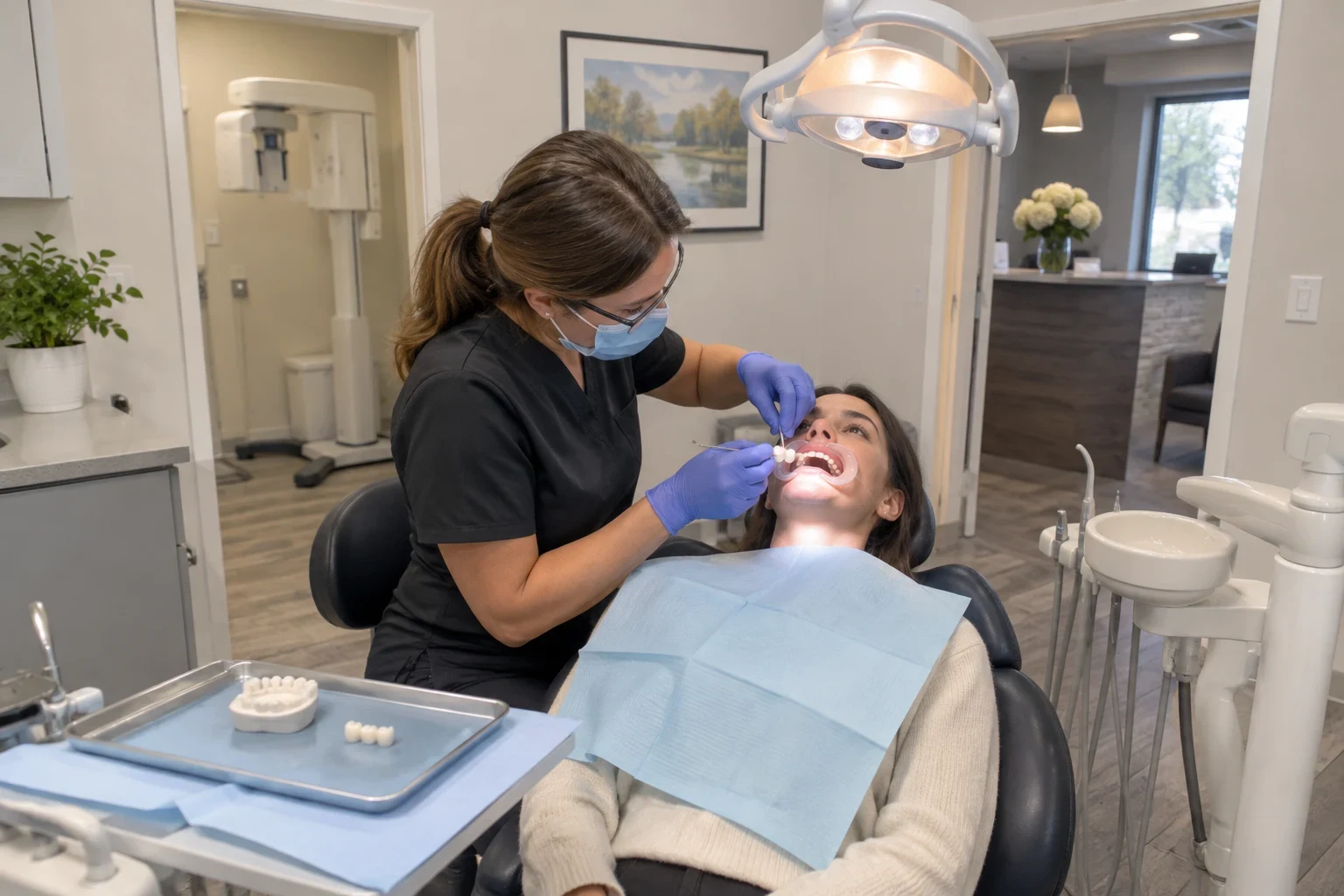
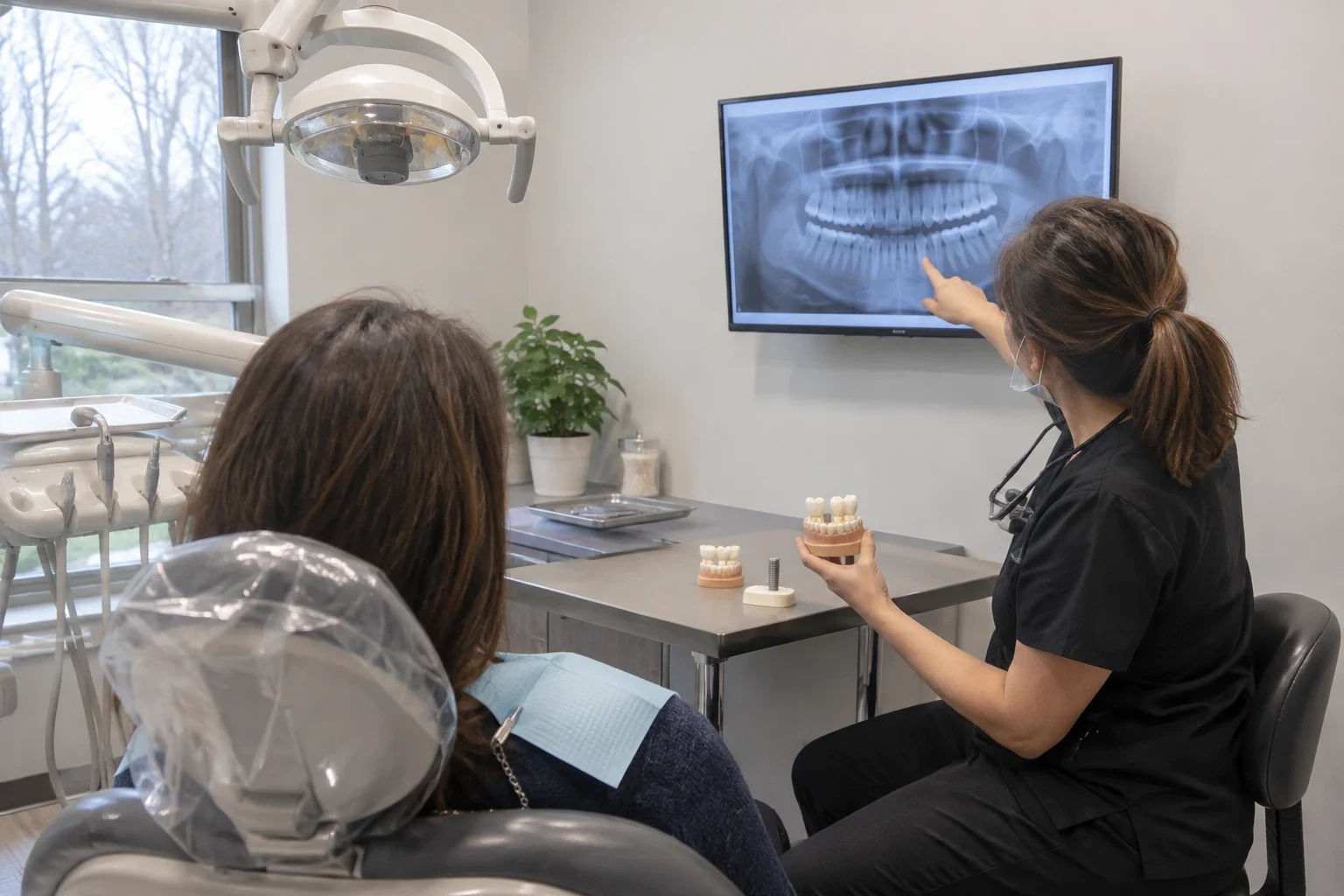
A crown protects a tooth that is cracked, worn or mostly filling. A bridge closes a gap left by a missing tooth. We photograph what we find, show you on screen, then shape and shade-match the restoration so it fits your bite and your smile.
When a filling is no longer enough
Fillings work well for small areas of decay. Once a tooth has lost a large share of its structure, from a crack, a root canal or an old filling that keeps breaking, the walls that remain can split under normal chewing. A crown covers the whole tooth and holds it together.
A bridge uses crowns on the teeth either side of a gap to support a replacement tooth between them. It is fixed in place, so there is nothing to take out at night.
Before we recommend either, we take close-up images and an X-ray and walk you through them. You see the crack line or the worn edge yourself, which makes the choice between a crown, a larger filling or waiting a clear one.
What your crown or bridge includes
- Photos and X-rays first
- We record the tooth before any work starts so you have a reference point. The same images go in your chart and can be shared with your insurance plan when it asks for documentation.
- Material chosen for the tooth
- Back teeth usually get zirconia, which handles heavy chewing forces. Front teeth often suit lithium disilicate, a glass ceramic that lets light through much like enamel. We explain why we chose one over the other.
- Shade and shape matching
- We match the shade under daylight-balanced lighting and note the small details, like translucency at the edge, that make a crown look like your own tooth.
- A well-fitted temporary
- Between visits you wear a temporary crown or bridge so the tooth stays protected and you can eat and speak normally.
- Bite adjustment and final check
- At the fitting we check contacts with the neighboring teeth and adjust the bite until it feels even. A final image of the finished tooth goes beside the first one in your record.
Signs a tooth may need a crown or bridge
Sharp pain when you bite down
A quick zing on release, especially with something firm, often points to a crack. Catching it early can mean a crown instead of an extraction.
A large filling that keeps chipping
When most of the tooth is filling material, the remaining walls are thin. Repeated repairs tend to weaken it further.
A tooth after root canal treatment
Back teeth that have had a root canal become more brittle over time and usually need a crown to keep from fracturing.
A gap from a missing tooth
Neighboring teeth can drift and tip into the space, and the opposite tooth can over-erupt. A bridge holds everything where it belongs.
A worn or old crown
Dark lines at the gum, chipped porcelain or decay at the margin mean an older crown may be due for replacement.
What affects the cost of a crown or bridge
Every quote comes from the exam, so we give you a written treatment plan before any work starts. Our office accepts most dental insurance plans, offers an Office Dental Plan for patients without insurance, and works with the CareCredit Patient Payment Plan. We can go over the plan by phone before your visit.
Single crown or bridge
A three-unit bridge involves two crowns and a replacement tooth, so it costs more than one crown.
Material
Zirconia, lithium disilicate and gold each carry different lab fees. We suggest what suits the tooth, and you choose.
What the tooth needs first
Deep decay may call for a buildup underneath, and some teeth need root canal treatment before a crown can go on.
Your insurance coverage
Plans differ in how they cover crowns and how often they will replace one. Our X-rays and chart records support the claim when the plan asks for them.
How the visits run
- 1
Exam and review
We examine the tooth, take X-rays and photos, and go through them with you. You leave with a written treatment plan that lists each step.
- 2
Preparation
With the area numbed, we remove decay and shape the tooth so the crown has room to sit. We capture the prepared tooth with an intraoral camera before taking the impression, then fit your temporary.
- 3
Lab work
The crown or bridge is made to the impression and the shade notes. This usually takes a couple of weeks.
- 4
Fitting and finish
We remove the temporary, try in the new restoration, check fit and bite, and bond it in place. You see the before and after photos side by side before you leave.
Crown and bridge questions
Does getting a crown hurt?
The tooth is fully numbed while we prepare it, so most patients feel pressure rather than pain. Some mild sensitivity around the gum for a few days afterward is common. It usually settles without anything more than an over-the-counter pain reliever.
How long does a crown last?
It varies with the material and the forces it meets each day. People who clench at night or crunch hard candy tend to wear a crown out sooner, and gum trouble at the edge can undermine one too. At your regular exams and cleanings we check those edges closely so small issues get handled before they spread.
Will people be able to tell it is a crown?
Not if the shade and shape are right. We match color in balanced lighting and look at translucency and surface texture, not just the main shade. You see the crown in your mouth before we bond it, and we only proceed when you are happy with it.
Can I eat normally with a temporary crown?
Yes, with some care. Avoid sticky foods like caramel and very hard foods on that side, and slide floss out sideways rather than pulling up. If the temporary comes loose, keep it and give us a call.
My teeth are crowded. Should that be fixed before a bridge?
Sometimes it should. If teeth have tipped into a gap, straightening them first can give a better-fitting bridge. We are an Invisalign provider, so we can tell you whether clear aligners make sense first or whether the bridge can go ahead as things are.
Find out what that tooth needs
We will examine it, show you the photos and explain your options, from a crown to a bridge to a simpler fix. Patients come to us from Northborough, Westborough, Shrewsbury and nearby towns.