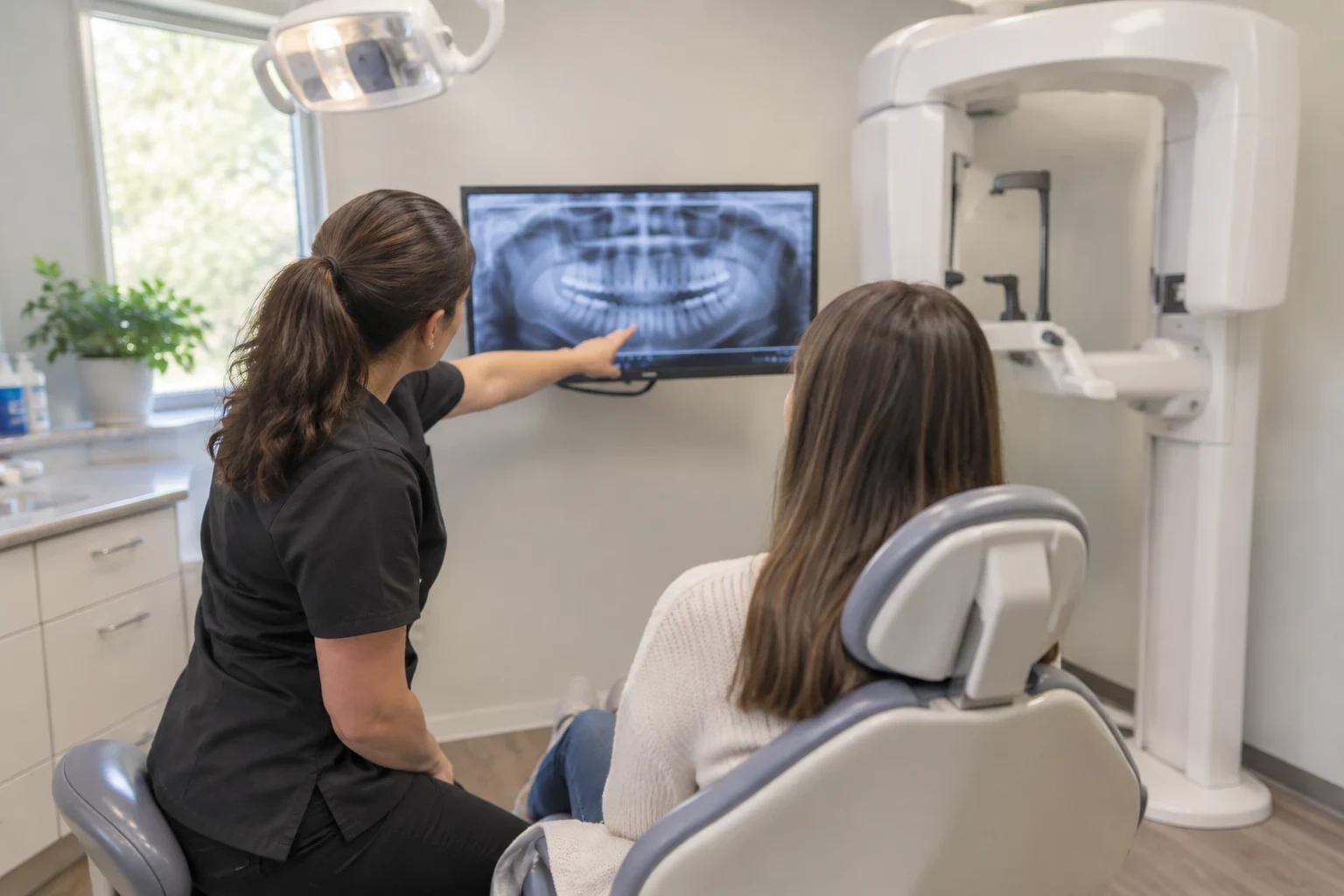
ServicesTeeth Whitening
Teeth Whitening in Northborough
We check your teeth first, photograph your starting shade, then lighten your smile with professional gel in our office or custom trays you wear at home. You see the before and after side by side and know exactly what changed.
Professional whitening, measured instead of guessed
Coffee, tea, red wine and time leave a film of stain on enamel and slowly darken the layer beneath it. Professional whitening uses a peroxide gel stronger than anything sold at the pharmacy, applied in a controlled way so the gel reaches your teeth and stays off your gums.
Before any gel goes on, we take a photo of your teeth next to a shade guide. That record matters more than it sounds. Whitening happens gradually, and most people stop noticing the change after a day or two. A second image taken under the same light at the end shows the honest result.
Whitening is not the right call for every smile. Crowns, bridges and tooth-colored fillings do not lighten, and some deep gray stains respond slowly. We tell you that at the start, so your plan fits your teeth.
What your whitening includes
A pre-whitening check
We look for cavities, worn enamel, exposed roots and gum irritation. Gel on an open cavity or a receding gumline can be painful, so those are handled first.
A recorded starting shade
We capture your teeth beside a shade tab in consistent lighting. You get a clear reference point for your own records.
In-office whitening
Your lips and gums are protected with a barrier, then the gel is applied in timed rounds during one visit. It suits people who want a noticeable change in a single appointment.
Custom take-home trays
We make thin trays shaped to your teeth, so a lower-strength gel sits evenly against enamel instead of leaking. You follow a short daily wearing schedule we set with you, usually lasting about two weeks. The trays stay yours, ready for touch-ups down the road.
Planning around existing dental work
If you have crowns or fillings on front teeth, we explain how they will look next to whitened enamel. Some patients whiten first and update older restorations afterward to match.
A matching final record
At the end we capture your teeth again with the same setup, so the before and after can be compared fairly.
Signs whitening could help your smile
- Yellowing that brushing does not lift
- Surface stain from coffee and tea often comes off at a cleaning. Yellow that remains afterward usually sits deeper and responds well to peroxide gel.
- Store-bought strips have stalled
- Over-the-counter strips contain less active ingredient and slip around uneven teeth. If they stopped making a difference, a fitted tray or in-office session usually goes further.
- A big event is on the calendar
- Weddings, portraits and new jobs are common reasons. Give yourself a few weeks so there is time for an exam and for any sensitivity to settle.
- You just finished aligners
- As an Invisalign provider, we often see patients who want to brighten their smile once the teeth are straight. Whitening after alignment gives an even result across every surface.
- Teeth look darker than they used to
- Enamel thins with age and the darker layer below shows through. Whitening can lighten that tone, and our check confirms nothing else is causing it.
How a whitening visit runs
- 1
Exam and cleaning
If you have not had a recent visit, we start with our exams and cleanings. Gel works best on clean enamel, and any decay found is treated before whitening begins.
- 2
Shade record
We match your teeth to a shade guide and take photos. We also talk through which teeth will change and which restorations will not.
- 3
Whitening treatment
For in-office whitening, we protect your gums and apply gel in rounds, checking your comfort between each one. For take-home whitening, we fit your trays and show you how much gel to use.
- 4
Final comparison
We record your result in the same light and set it beside your starting shade. If sensitivity came up, we suggest a desensitizing toothpaste and adjust how often you wear the trays.
What affects the cost of whitening
Whitening is usually treated as cosmetic, so dental insurance plans typically do not cover it, though they may cover the exam that comes first. We accept most dental insurance plans and go over the cost of your plan before treatment starts. If you have no coverage, our Office Dental Plan for patients without insurance is one option, and if you would rather pay over time, the CareCredit Patient Payment Plan is another.
- In-office or take-home
- A single chairside session and a set of custom trays involve different time and materials. Some patients choose both, starting in the office and maintaining with trays.
- Work needed beforehand
- Cavities, gum irritation or old leaking fillings should be treated first. That work is priced separately.
- How stubborn the stain is
- Yellow stain often lightens quickly. Gray or banded stain may need longer tray use or extra sessions.
- Matching restorations
- If front crowns or fillings will look dark after whitening, replacing them is a separate decision we discuss with you.
Teeth whitening questions
- Will whitening make my teeth sensitive?
- Some people feel brief zings during treatment or for a day or two afterward. It usually fades on its own. We can shorten tray wear time or suggest a desensitizing toothpaste if it bothers you.
- How long do the results last?
- It depends largely on what you eat and drink. Coffee, tea and red wine bring stain back faster. Keeping your trays for occasional touch-ups helps hold your shade.
- Will my crowns or fillings whiten too?
- No. Porcelain and composite keep their original color. We point out which restorations might stand out before you begin, so nothing surprises you.
- Can I whiten during Invisalign treatment?
- Some patients do, but most get a more even result by waiting until their teeth have finished moving. We can talk through the timing at your aligner visits.
- Is whitening safe for my enamel?
- Professional peroxide gel lightens the color inside the tooth without wearing enamel away when used as directed. The bigger risk is using gel on untreated decay or exposed roots, which is why we check first.
- Should I avoid anything after whitening?
- For the first day or two, teeth pick up stain more easily. Go easy on coffee, tea, red wine and tomato sauce, or rinse with water after them.
See your starting shade, then your new one
We check your teeth, record your shade and recommend the whitening option that fits. Patients from Northborough, Westborough and Shrewsbury can set it all up in one phone call.