ServicesInvisalign / Clear Aligners
Invisalign and Clear Aligners in Northborough
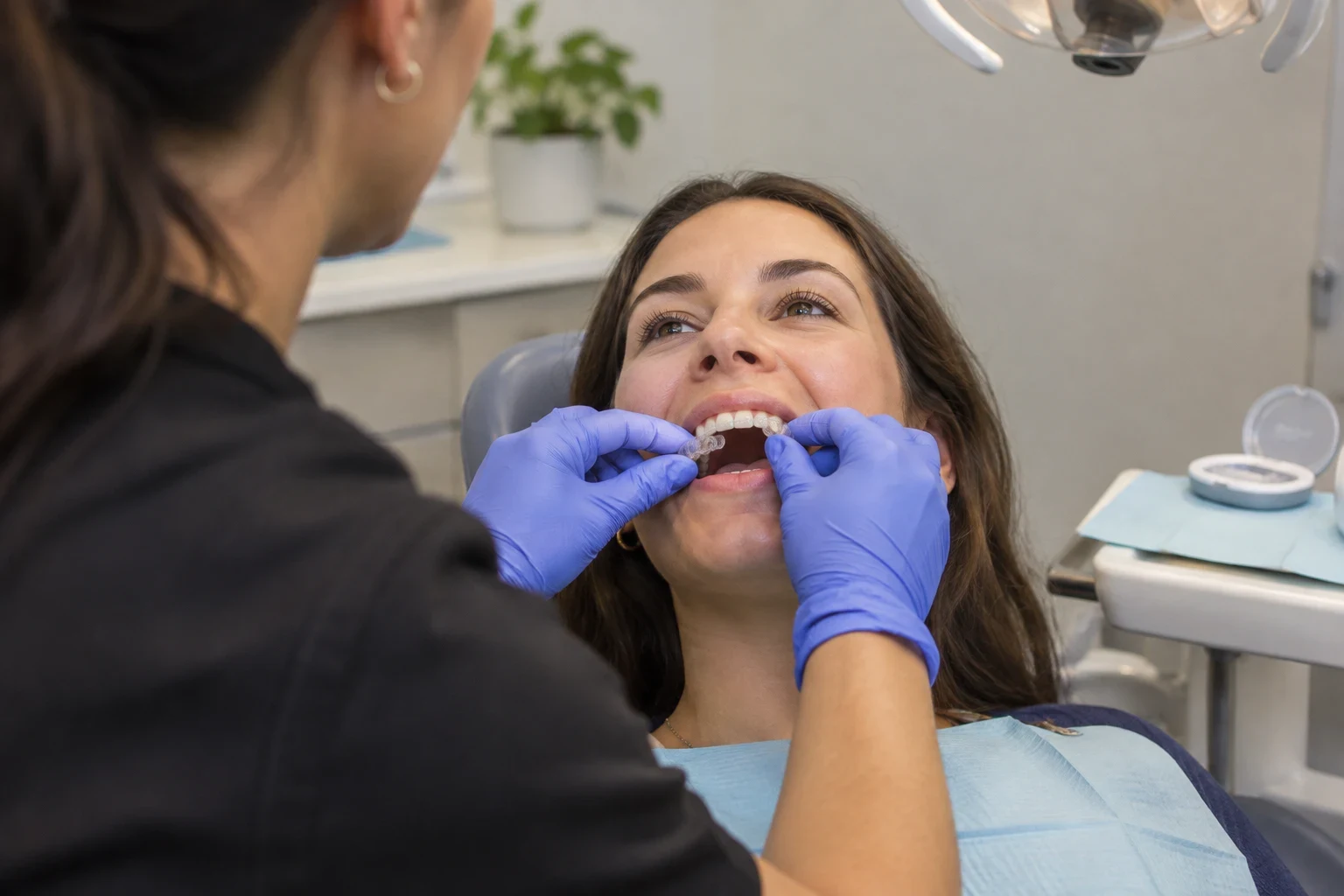
Clear aligners move teeth gradually with a series of thin, removable trays. We record your smile as it is today, then photograph it again at each check-in. You can see the progress for yourself instead of taking our word for it.
Straighter teeth without brackets or wires
We are an Invisalign provider. Aligners are clear plastic trays, each shaped slightly differently from the last. You wear each set for a short stretch, and the teeth shift a small amount with every change. Most patients wear them through the day and night, taking them out only to eat, drink anything but water, and brush.
Aligners work well for adults and older teens whose teeth are crowded or spaced apart, whose teeth have wandered since an earlier round of orthodontics, or whose bite is off by a modest amount. They are not the right tool for every case. Some bite problems come from the jaw itself and need traditional orthodontics, and we will tell you that at the consult rather than start a plan that cannot finish well.
They also help with other dental work. Teeth that sit straight are easier to clean, and a tilted tooth next to a gap can be uprighted before a bridge or crown is placed.
What your aligner treatment includes
Starting records
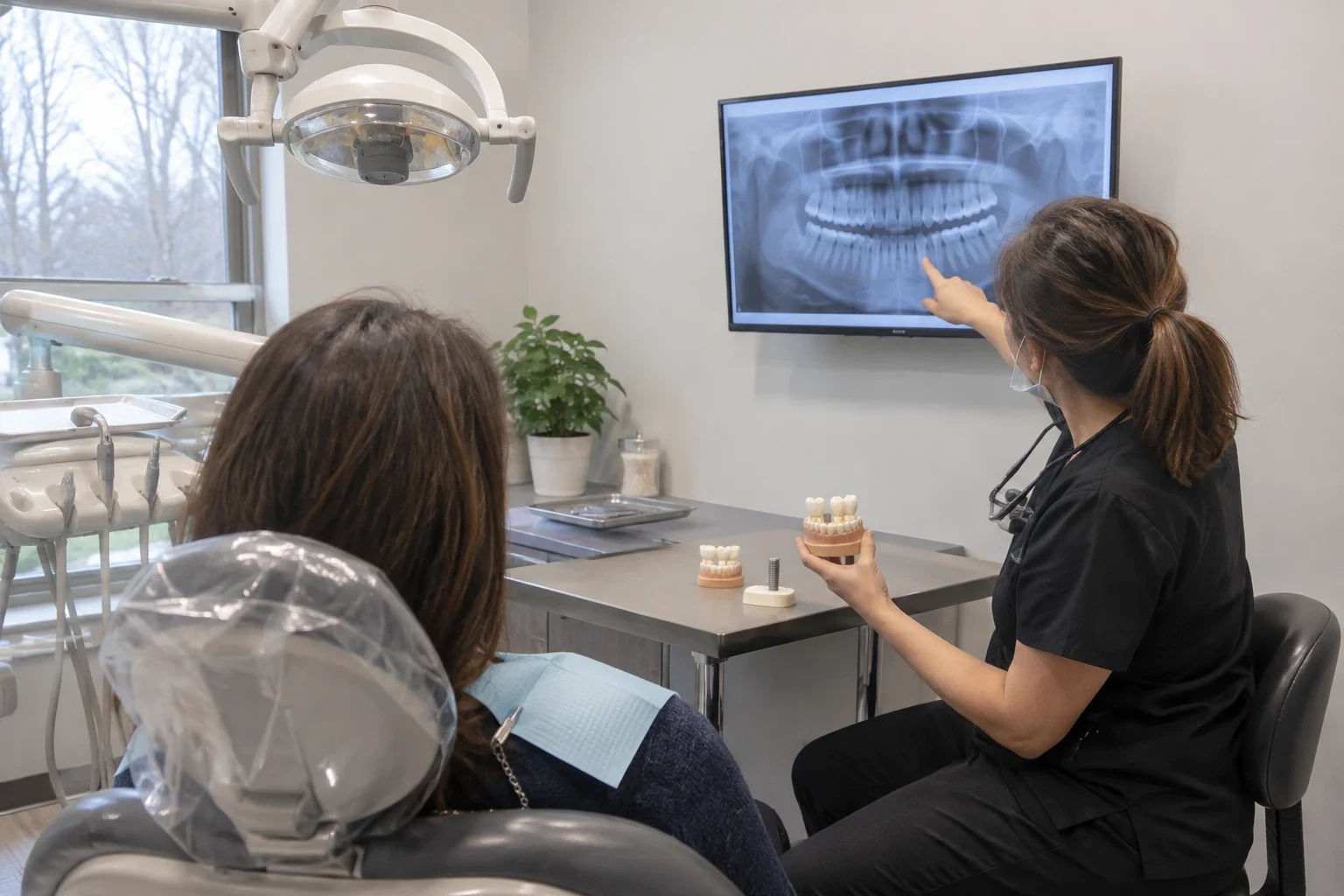
We take images of your face and smile, X-rays and impressions or a scan of your teeth. These become the reference point for everything that follows.
A treatment simulation you can review
Your records go into Invisalign's planning software, which shows how each tooth is expected to move from first tray to last. We walk through it with you before anything is ordered.
Fitting and attachments
On fitting day we bond small tooth-colored bumps, called attachments, to certain teeth so the trays can grip and guide them. Some cases also need a light polish between teeth to make room.
Check-ins you can compare
Every few weeks we check the fit, look at how the teeth are tracking and take fresh photos. You can set them side by side with your starting records.
Adjustments if teeth fall behind
Teeth do not always move exactly on schedule. If one lags, we may take new records and order additional trays to bring it into line.
Retainers at the finish
Teeth want to drift back, especially in the first year. We fit retainers and explain how often to wear them so the result holds.
Signs clear aligners may be right for you
- Floss shreds or catches
- Crowded, overlapping teeth trap food and tear floss. Those tight spots are where we often find early decay and gum irritation.
- Gaps that keep catching food
- Spaces between front or back teeth can be closed gradually, which also makes the gumline easier to keep healthy.
- Teeth shifted after old braces
- If you stopped wearing a retainer years ago, the lower front teeth have often crept back together. Aligners handle this kind of relapse well.
- Uneven wear on tooth edges
- Chipped or flattened edges can mean teeth meet at the wrong angle. Correcting the bite can take pressure off them.
- A planned crown or bridge
- A tooth that has tipped into a space can make a bridge or crown harder to fit. Straightening it first often gives a better result.
How treatment runs, start to finish
- 1
Consult and records
We look at your teeth, gums and bite and take images and X-rays. Any cavities or gum problems are treated first, since aligners sit over the teeth for most of the day.
- 2
Plan review
Once the simulation is ready, we go through it with you: how many trays, roughly how long, and what the finished smile should look like. You decide whether to go ahead.
- 3
Fitting day
We place the attachments, fit your first trays and have you practice seating them and easing them free until it feels routine. Expect a feeling of pressure for a day or two with each new set.
- 4
Wearing and check-ins
You switch trays on schedule and come in every few weeks. Each visit adds new photos to your record so progress is easy to see.
- 5
Finishing and retainers
When the teeth reach their planned positions, we remove the attachments, polish the surfaces and fit your retainers.
What shapes the cost of aligners
Every aligner case is priced from its own treatment plan, so we give you the numbers after the records and simulation are done. We accept most dental insurance plans, and the CareCredit Patient Payment Plan lets you spread the cost out over time.
- How much movement is needed
- Minor crowding of the front teeth may need only a short series. Bite corrections and larger shifts need more trays and more months.
- Work needed before starting
- Cavities, gum treatment or a cleaning may come first. Those are separate from the aligners themselves.
- Additional trays
- If teeth fall behind schedule, extra trays may be ordered. Wearing aligners for the full recommended hours each day is the best way to keep this to a minimum.
- Retainers
- Retainers are part of keeping the result, and the type you choose affects the overall cost.
- Your insurance coverage
- Some plans include orthodontic benefits for adults, many do not. We check what your plan covers before treatment begins.
Questions patients ask about Invisalign
- Do aligners hurt?
- Most patients describe pressure rather than pain, mostly in the first day or two of each new tray. It fades as the teeth settle. Attachments can feel rough on the lips at first, and that usually passes within a week.
- How long does treatment take?
- It depends on how far the teeth need to move. Simple front-teeth cases can be fairly short, while bite corrections take longer. Once your simulation is ready, we can give you a realistic timeline.
- Can I eat and drink normally?
- You take the trays out to eat and to drink anything other than plain water. Brush before putting them back in, so food and sugar are not held against your teeth.
- Does insurance cover clear aligners?
- Some plans with orthodontic benefits cover part of the cost, often with an age limit or a lifetime maximum. We review your plan with you before you commit. Patients without insurance can ask about our Office Dental Plan.
- Are aligners an option for my teenager?
- Often, yes, if the teen will keep the trays in for most of the day. For younger children, our Kids' Dentistry visits are where we watch how the teeth and jaw are developing.
- What happens if I lose a tray?
- Phone us so we can decide whether you should move to the next tray or wear the previous one while a replacement is ordered. Keep the case with you whenever the trays are out.
See what your smile could look like
Your first visit covers records, X-rays and an honest answer about whether aligners suit your teeth. We see patients from Northborough and nearby towns such as Westborough and Shrewsbury.