ServicesExtractions
Tooth Extractions in Northborough
When a tooth is cracked past saving, badly decayed or crowding its neighbors, removing it can end the pain and protect the rest of your smile. We show you the X-ray and photos first, explain the options, and keep the visit calm and comfortable.
When removing a tooth is the right call
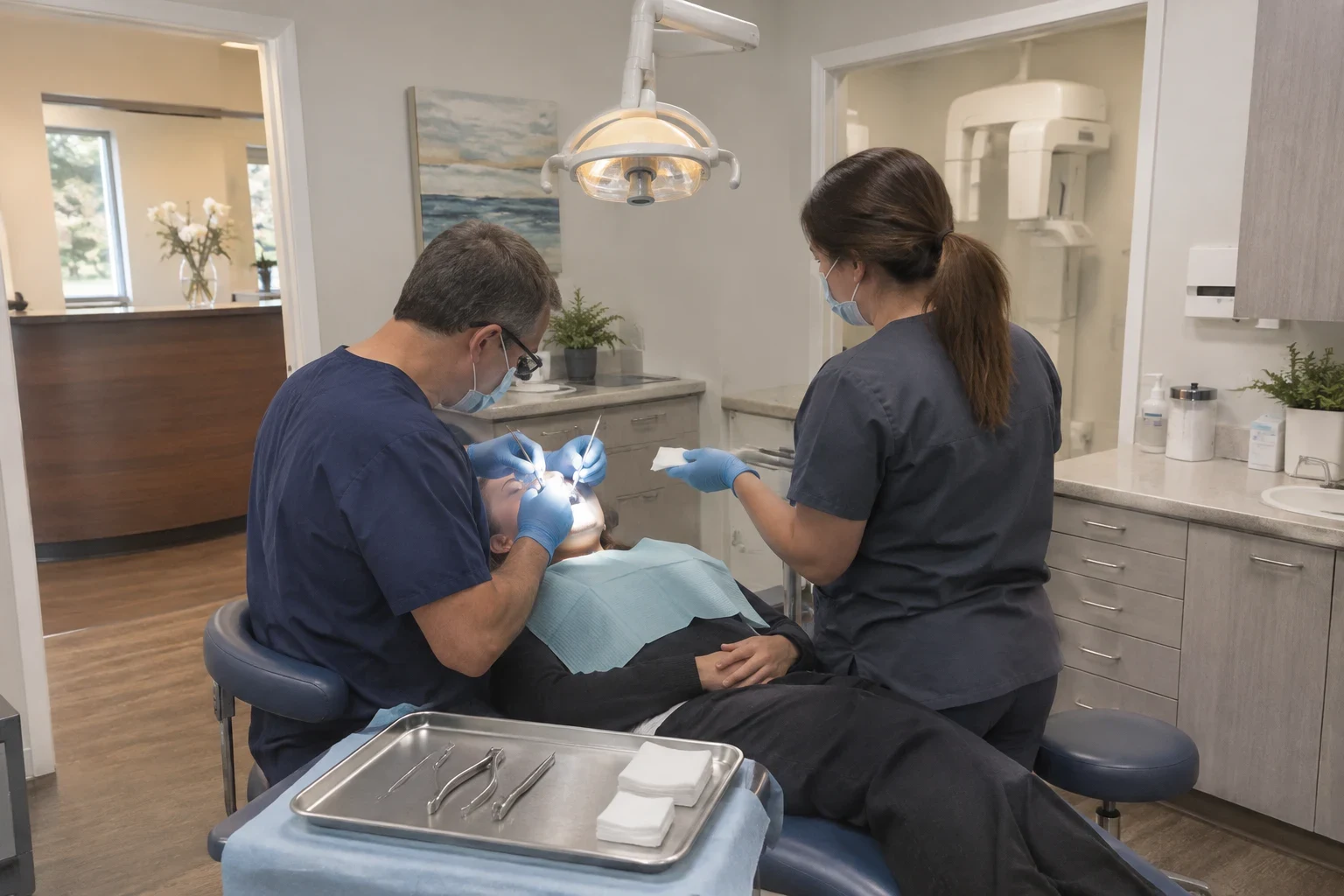
We treat extraction as a considered decision, not a default. Many painful teeth can be saved with a filling or a crown, and we will tell you when that is the better path. An extraction makes sense when the root is fractured, decay has reached below the gumline, infection keeps returning, or a wisdom tooth is trapped and damaging the tooth in front of it.
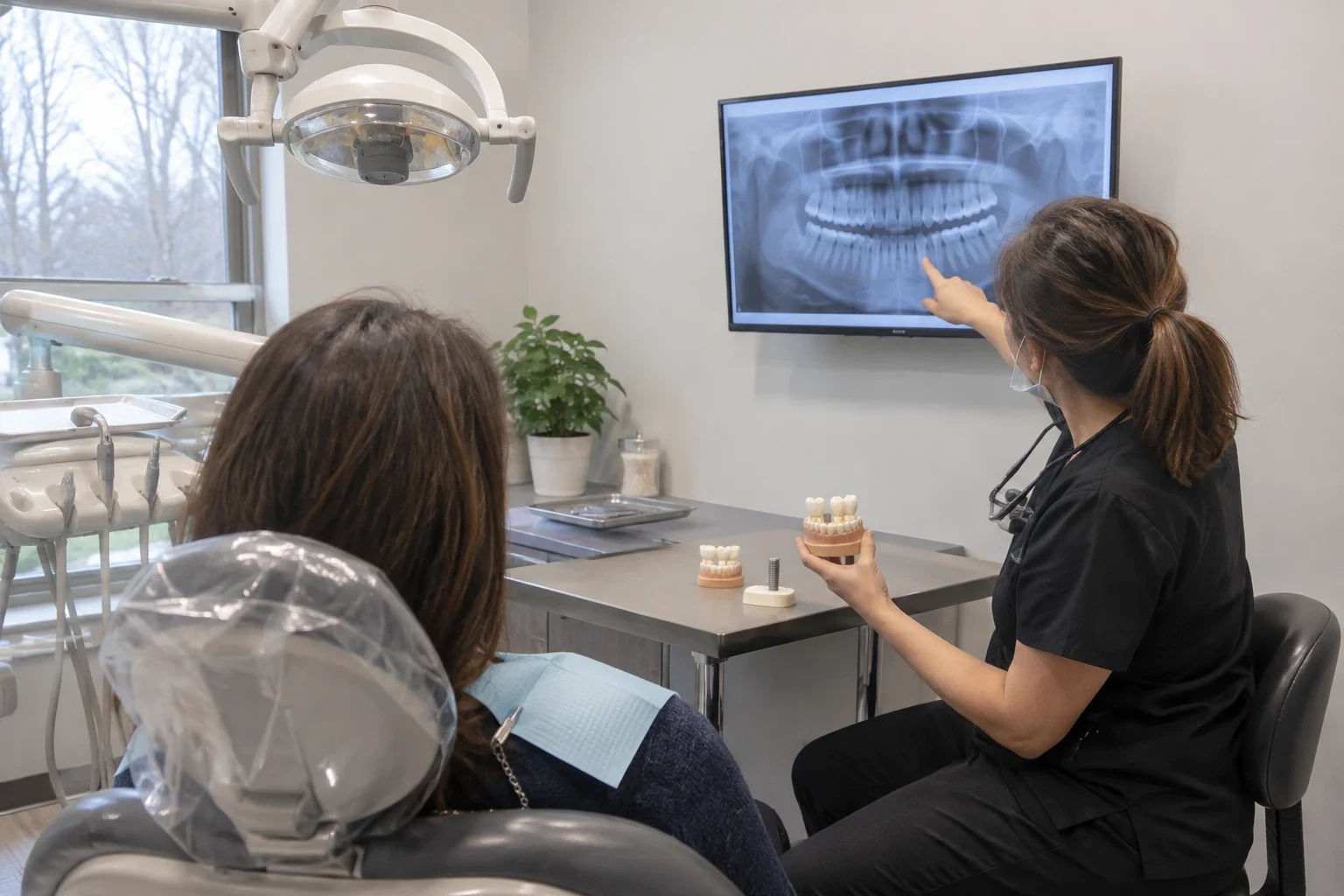
Before anything is decided, you see what we see. We take an X-ray and intraoral photos, put them on the screen beside your chair, and walk through the root shape, the bone around it and the condition of nearby teeth. Those images stay in your record, so you can compare them with the healed site later or share them with family helping you decide.
What your extraction visit includes
- 01
X-ray and close-up imaging
We image the tooth and the bone around it to see root length, curvature and any infection. You get to look at the same pictures we are using to plan.
- 02
A plain answer on save or remove
If a crown, a filling or other treatment can keep the tooth, we say so. If removal is wiser, we explain why in everyday terms.
- 03
Thorough local numbing
We take time to numb the area fully and check it before we begin. You should feel pressure, not sharp pain.
- 04
Simple or sectioned removal
Most teeth come out whole with gentle rocking. A tooth with curved roots or one that has broken at the gumline may be divided into sections so each piece lifts out with less force on the surrounding bone.
- 05
A visual record of healing
We photograph the cleaned socket before you leave and again at your follow-up, so you can see how the site is closing.
- 06
Written aftercare and replacement options
You leave with clear instructions for the first few days. When a gap will affect your bite or appearance, we talk through replacing the tooth, including a bridge from our Crowns & Bridges service.
Questions about Extractions?
Call(508) 715-9996When an extraction may be the better choice
A fracture that reaches the root
Once a split travels down into the root, there is usually no way to seal it. You may feel a quick, sharp twinge when you bite that fades and then returns.
Decay that has left little to work with
When most of the tooth has been eaten away, there is not enough healthy structure left to hold a filling or a crown in place.
A bump on the gum, swelling or a bad taste
A small blister-like spot near a tooth, a sour taste or a puffy cheek can mean infection around the root. These are worth an appointment soon rather than waiting.
Wisdom teeth that hurt or collect food
A wisdom tooth that has only partly come through tends to hold food under the gum flap, which gets sore and inflamed. It can also press against the molar beside it.
An adult tooth that shifts when you chew
Bone loss around a tooth can let it move under pressure. Before suggesting removal, we look at whether it can be steadied.
How the appointment goes
- 1
Look and explain
We review your health history and medications, take the X-ray and close-up images, and go over what they show. You can ask questions before anything starts.
- 2
Numb and confirm comfort
We apply a topical gel, then the local anesthetic, and wait until the area is fully numb. We check in with you throughout.
- 3
Remove the tooth gently
Using steady, controlled movements, we loosen and lift the tooth. If it needs to be sectioned, we tell you before we do it.
- 4
Clean, record and close
We clean the socket, capture an image for your chart, and place gauze or a few stitches if needed. Most simple extractions take well under an hour in the chair.
- 5
Follow-up check
About a week later we look at the site, take a fresh image and compare it with the first ones so you can see the healing for yourself.
What affects the cost of an extraction
We give you the cost for your specific tooth after the exam, before any work begins, so there are no surprises. We accept most dental insurance plans and will help you understand what your plan is likely to cover. Patients without insurance can join our Office Dental Plan, and financing is available through the CareCredit Patient Payment Plan.
- Simple or surgical
- A fully visible tooth that lifts out whole takes less time than one that must be sectioned or reached below the gum.
- Root shape and position
- Long, curved or fused roots, and impacted wisdom teeth, call for more careful work.
- Infection present
- An active infection may need to be calmed before removal, which can add a visit or a prescription.
- Imaging and replacement
- X-rays are part of every plan. If you choose to replace the tooth later, that is a separate treatment priced on its own.
Extraction questions patients ask
Will it hurt?
We numb the area first and test it before we begin. What most people notice is a firm push as the tooth loosens, not a sharp sensation. Expect the spot to feel tender for two or three days, and we go over how to keep that under control.
How long does healing take?
The gum usually closes over the socket within one to two weeks, while the bone underneath fills in over the following months. Avoiding straws, smoking and hard chewing on that side for the first days helps protect the healing clot.
Do I need to replace the tooth?
Not always. Wisdom teeth and some back teeth can be left as a gap without trouble. When a missing tooth would let neighbors drift or affect chewing, we discuss options such as a bridge and point out on your images why it matters.
Can teeth be removed to make room before aligners?
Sometimes, when crowding is severe. As an Invisalign provider, we plan any extraction together with your aligner treatment so the spacing works with the tooth movement, rather than removing teeth on their own and hoping it fits.
What should I eat afterward?
Stick to soft, cool foods like yogurt, eggs and soups that are not hot for the first day or two. Chew on the other side and add firmer foods back as the area feels comfortable.
See the tooth before you decide
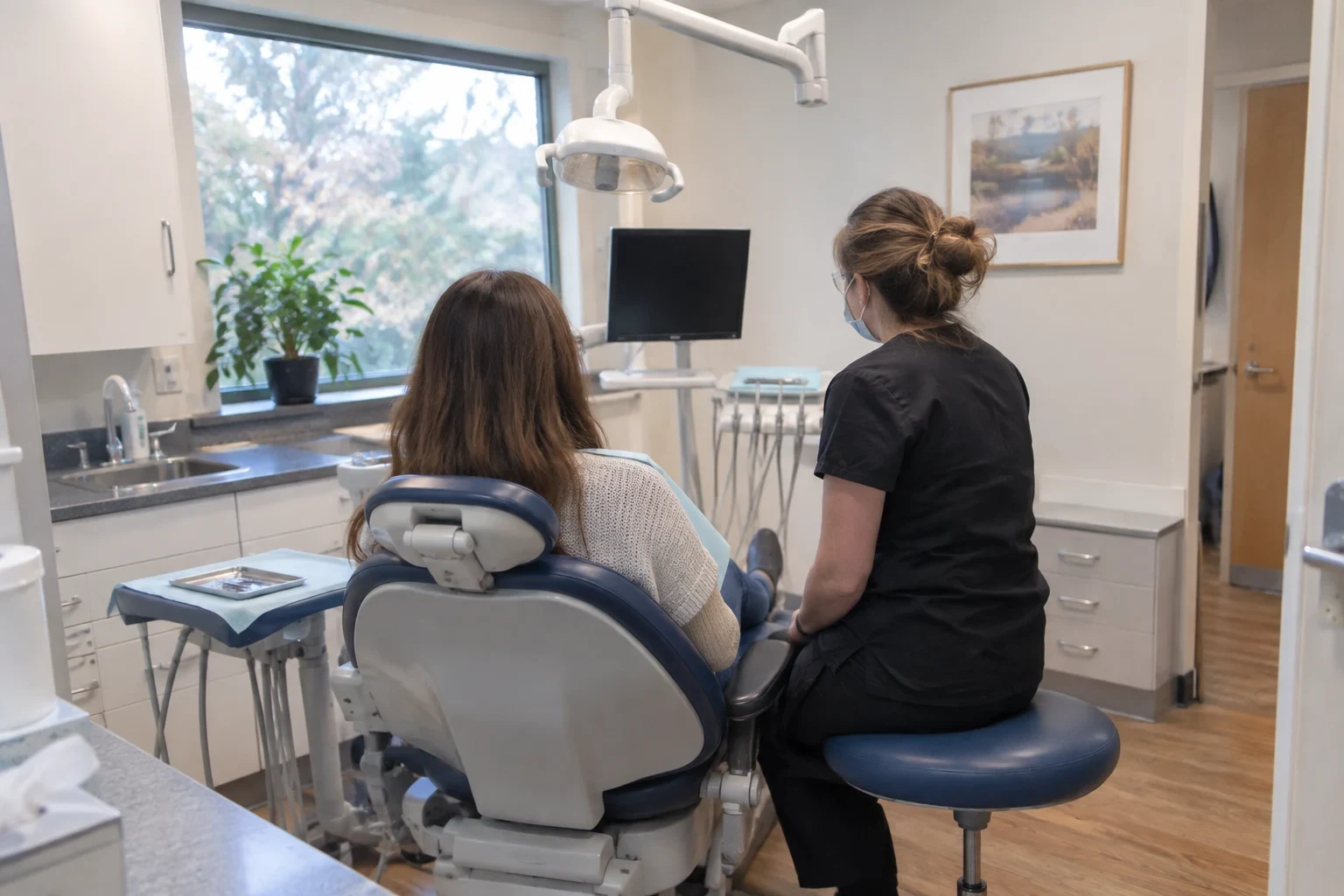
Bring your questions and any X-rays you already have. We will show you what is going on, lay out the options plainly and schedule the treatment that fits.